

































Online MBA in Logistics and Supply Chain Management
For those interested in managing the movement of goods, resources and operations, and who want to combine business strategy with supply chain expertise, the Online MBA in Logistics and Supply Chain Management at Andhra University can help build their career. You can specialize in this field while continuing your job without relocating.
Know More About Online MBA Logistics & Supply Chain Management at Andhra University
An Online MBA in Logistics & Supply Chain Management merges the larger discipline of business administration with the specialized disciplines related to product movement and management. Andhra University offers Logistics & Supply Chain Management as one of the specialisations of its Online MBA course. According to Andhra University, this 2 year online MBA course provides students with 9 different specialisation choices.
The specialisation connects management education with areas such as:
Logistics management
Supply chain management
Procurement
Inventory management
Warehousing
Distribution
Transportation
Supply chain planning
Data analytics
The published Andhra University curriculum for MBA Logistics & Supply Chain Management includes subjects such as Basics of Logistics and Supply Chain Management, Operations & Green Supply Chain Management, Warehouse and Distribution Management, Inventory Management, Procurement, Storage & Warehouse Management, and Port and Airport Management for Logistics Management.
In practical terms, the programme looks at the entire journey of a product:
Supplier => Procurement => Inventory => Warehouse => Transportation => Distribution => Customer
That is the part that makes this specialisation particularly interesting. The product may look simple on an e-commerce screen, but getting it there is anything but simple.
Why Choose Andhra University for Online MBA Logistics & Supply Chain Management?
Andhra University's Online MBA offers Logistics & Supply Chain Management as a dedicated specialisation alongside areas such as Marketing, Finance, Human Resource Management, Digital Marketing, Business Analytics, Healthcare & Hospital Management, Project Management, and Data Science & Analytics.
Key points to consider include:
2-year Online MBA
Dedicated Logistics & Supply Chain Management specialisation
Core MBA learning combined with specialised subjects
Online mode of study
Real-world case study exposure
Digital learning resources
Business-focused learning
Scope to study logistics, procurement, inventory and supply chain functions
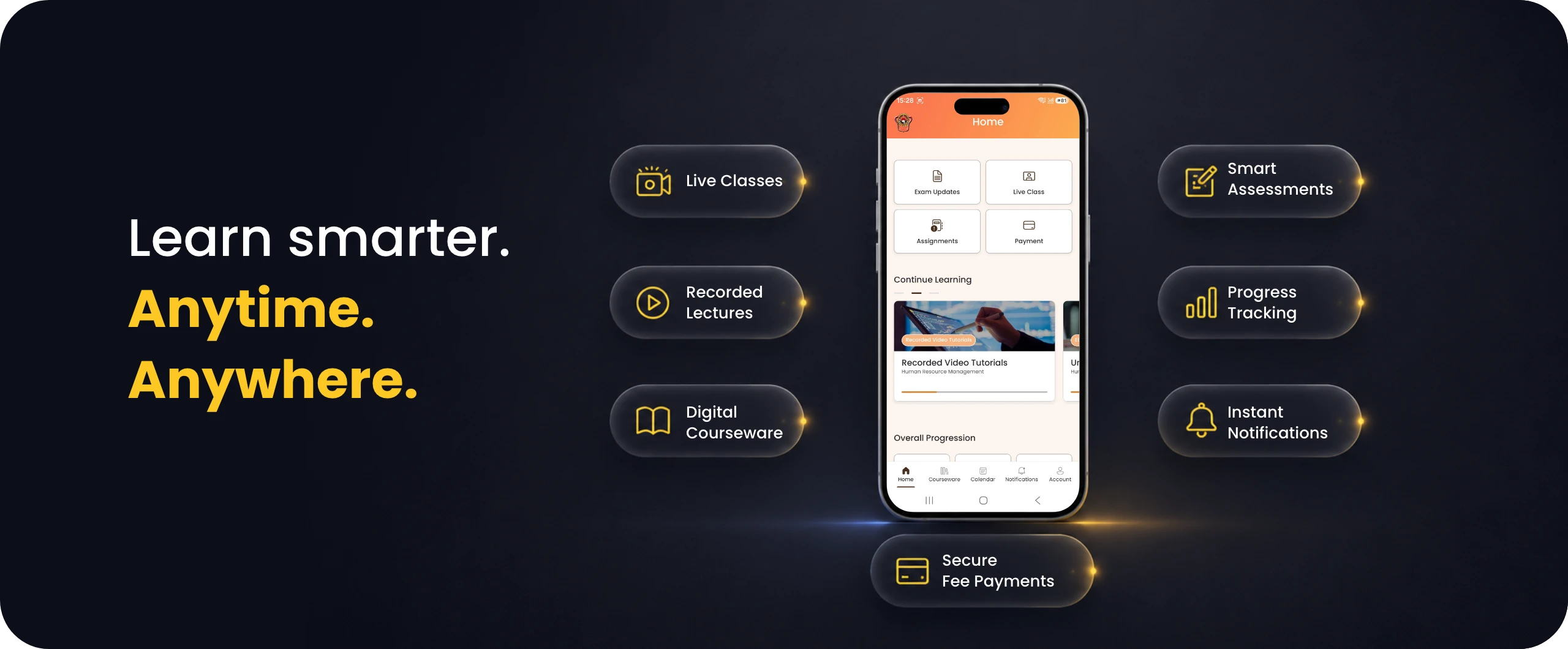
Andhra University's online learning information also refers to live interactive sessions, tutorials, digital learning resources, practice assignments, discussion forums, simulated case studies and other online learning activities.
The university's published syllabus further demonstrates that the specialisation is not limited to simply learning the definition of logistics. It moves into areas such as supply chain planning, performance measurement, forecasting, materials management, warehouse management and enterprise resource planning.
What Makes Logistics and Supply Chain Management an Important MBA Specialisation?
Every business that makes, stores, sells or delivers something has a supply chain.
A typical supply chain connects several activities:
Supply chain management therefore goes beyond transportation. It connects procurement, production, inventory, logistics and distribution into one larger business process.
Businesses use supply chain planning to work towards:
Better resource utilisation
Efficient inventory management
Timely product movement
Supplier coordination
Cost management
Customer fulfilment
Operational planning
Data and technology are also becoming increasingly relevant. Andhra University's published logistics and supply chain curriculum includes business statistics and data analytics, demand forecasting, supply chain performance measurement, enterprise resource planning and IT applications.
Key Highlights
The Online MBA Logistics & Supply Chain Management programme at Andhra University combines core MBA subjects with specialised learning in logistics and supply chain management. Here are the key programme details at a glance:
Programme Name: Online MBA Logistics & Supply Chain Management
University: Andhra University
Mode of Learning: Online
Duration: 2 years
Number of Semesters: 4
Specialisation: Logistics & Supply Chain Management
Online MBA Fees: ₹62200
Eligibility: Bachelor's degree of minimum 3 years with 50% marks, with 45% marks for reserved category candidates
Programme Structure: Core MBA subjects along with selected specialisation subjects
Assessment: Internal and semester-end examinations as prescribed by the university
Learning Platform: Online learning platform
Recognition/Approval: Andhra University states that its Online MBA is UGC Entitled.
Benefits and Advantages
An Online MBA Logistics & Supply Chain Management combines management education with practical knowledge of how goods, materials, information and resources move through a business. It can help learners understand both the bigger supply chain picture and the decisions happening at each stage.
Build Supply Chain Management Knowledge
An Online MBA Logistics & Supply Chain Management helps learners understand how different supply chain activities connect and influence business operations.
Key areas include:
Supply chain planning and strategy
Supply chain coordination and performance
Demand forecasting
Logistics operations
End-to-end supply chain processes
Develop Logistics and Operations Understanding
The programme covers the operational side of moving goods from one point to another, including:
Transportation
Warehousing
Distribution
Logistics planning
Material movement
Operational coordination
Understand Procurement and Supplier Management
Procurement focuses on sourcing the materials, products and services a business needs. Learners can explore:
Sourcing and purchasing
Supplier management
Vendor coordination
Procurement planning
Materials management
Strengthen Inventory Management Knowledge
Inventory is all about finding the sweet spot between shortage and excess stock. Key areas include:
Inventory planning and control
Demand and supply
Economic Order Quantity
Reorder Point
ABC analysis
Materials management
Andhra University's published curriculum includes inventory and materials management concepts.
Develop Analytical and Decision-Making Skills
Supply chain decisions increasingly rely on data. The programme can cover:
Demand forecasting
Data analytics
Performance measurement
Quantitative techniques
Cost analysis
Andhra University's curriculum includes Business Statistics and Data Analytics, forecasting and supply chain performance measurement.
Understand Technology-Enabled Supply Chains
Technology is becoming a bigger part of modern supply chains. Relevant areas may include:
Enterprise Resource Planning
IT applications
Supply chain analytics
Data-driven decision-making
Digital supply chain processes
Automation
Andhra University's published curriculum includes ERP and IT applications related to logistics and supply chain management.
Ideal Candidates
An Online MBA Logistics & Supply Chain Management can suit learners from different academic and professional backgrounds who want to understand supply chain and business operations.
Fresh Graduates Interested in Supply Chain Careers
Suitable for graduates interested in:
Logistics
Procurement
Operations
Inventory
Warehousing
Distribution
Working Professionals in Logistics and Operations
Relevant for professionals working in:
Logistics
Procurement
Warehousing
Transportation
Distribution
Operations
The online format can also allow professionals to study alongside their work.
Professionals From Manufacturing and Related Functions
Manufacturing professionals involved in production planning, sourcing, materials, inventory or distribution can explore the specialisation to understand the wider supply chain.
Professionals Planning a Career Switch
Professionals from sales, operations, business development, procurement or business administration may consider the programme when moving towards supply chain-focused roles.
Entrepreneurs and Business Owners
Business owners dealing with physical products can benefit from knowledge of:
Procurement
Inventory
Supplier management
Warehousing
Distribution
Logistics planning
Teaching Methodology
The programme uses an online learning approach that combines digital resources, interactive sessions and academic activities to support flexible learning.
Live and Recorded Learning Sessions
Students can access learning through:
Live interactive sessions
Digital learning resources
Tutorials
Online academic activities
Study material
Andhra University's online learning information mentions live interactive sessions and digital learning resources.
Case Study-Based Learning
Case studies can turn supply chain concepts into practical business situations, covering areas such as:
Inventory
Procurement
Transportation
Warehousing
Distribution
Demand forecasting
Andhra University's online learning information includes simulated case studies.
Assignments and Projects
Academic activities may include:
Practice assignments
Case analysis
Research activities
Subject-based tasks
Business problem analysis
Specific project requirements should be checked against the applicable curriculum.
Digital Learning Platform
The online learning environment can provide access to:
Digital textbooks
Tutorials
Practice assignments
Discussion forums
Simulated case studies
Practice tests
Examinations and Assessment
Assessment may include internal assessments and semester-end examinations, along with applicable assignments and evaluation requirements. Students should follow the latest university guidelines for examination and assessment rules.
Eligibility
The eligibility criteria focus mainly on the candidate's academic qualification and minimum marks required for admission.
Educational Qualification
Candidates must have:
A bachelor's degree of at least 3 years' duration
10+2 qualification
50% marks in the qualifying examination
45% marks for reserved category candidates
Minimum Marks
General: 50%
Reserved category: 45%
Work Experience Requirements
Prior logistics or supply chain experience is not mandatory under the stated eligibility criteria. Fresh graduates and working professionals can apply if they meet the academic requirements.
Entrance Examination Requirements
The stated eligibility criteria do not list a separate entrance examination requirement for the Online MBA. Applicants should check the latest admission instructions before applying.
Documents Required
Applicants may need:
Bachelor's degree certificate and marksheets
10+2 documents
Identity proof
Photograph
Other documents specified by the university
Admission Process
The admission process generally moves from online registration and application to document verification, fee payment and access to the learning platform.
Online Registration
The admission process begins with registration through the university's online admission system.
Basic steps include:
Visit the official online admission portal.
Register using the required information.
Select the Online MBA programme.
Select Logistics & Supply Chain Management as the specialisation, where applicable.
Application Form
Complete the application form with accurate:
Personal details
Academic details
Contact information
Programme preferences
Before submitting, check spellings, marks and uploaded information. Tiny mistakes have a habit of becoming disproportionately annoying later.
Document Submission
Upload the required academic and identity documents according to the instructions provided by the university.
The documents are used to establish the applicant's eligibility and academic background.
Eligibility Verification
The submitted academic information and documents are reviewed to determine whether the applicant meets the programme requirements.
Applicants should ensure that uploaded documents are clear and valid.
Fee Payment
After completing the applicable application requirements, students need to pay the prescribed programme or admission fee.
The current fee structure should be checked directly through the official university admission portal before making payment.
Admission Confirmation
After the required application, document and eligibility processes are completed, successful applicants receive admission confirmation according to the university's process.
LMS and Learning Access
After enrolment, students can access the online learning environment and programme resources according to the university's instructions.
Andhra University's online learning information describes a virtual learning environment with access to digital academic resources.
Syllabus
The Online MBA Logistics & Supply Chain Management curriculum combines core management subjects with specialised learning in logistics, supply chain and inventory management. The programme also includes project work and viva-voce in the final semester.
Core MBA and Management Subjects
The first two semesters focus on building a strong foundation in management and business concepts.
Semester 1:
Management Process & Behaviour, 4 credits
Quantitative Techniques for Managerial Decisions, 4 credits
Business Environment, 4 credits
Accounting for Decision Making, 4 credits
Managerial Economics, 4 credits
Semester 2:
Managerial Communications, 4 credits
Human Resource Management, 4 credits
Marketing Management, 4 credits
Financial Management, 4 credits
Operations Management, 4 credits
Logistics and Supply Chain Management
The specialised part of the curriculum begins in Semester 3, focusing directly on logistics, supply chain and inventory functions.
Semester 3:
Logistic Management, 4 credits
Supply Chain Management, 4 credits
Inventory Management, 4 credits
These subjects introduce learners to the movement and management of goods, supply chain coordination and inventory planning.
Specialised Logistics Learning and Project Work
Semester 4 adds specialised logistics knowledge along with academic project work and evaluation.
Semester 4:
Maritime Logistics & Documentation, 4 credits
Project Work, 4 credits
Viva-Voce, 4 credits
Total Credits: 64